
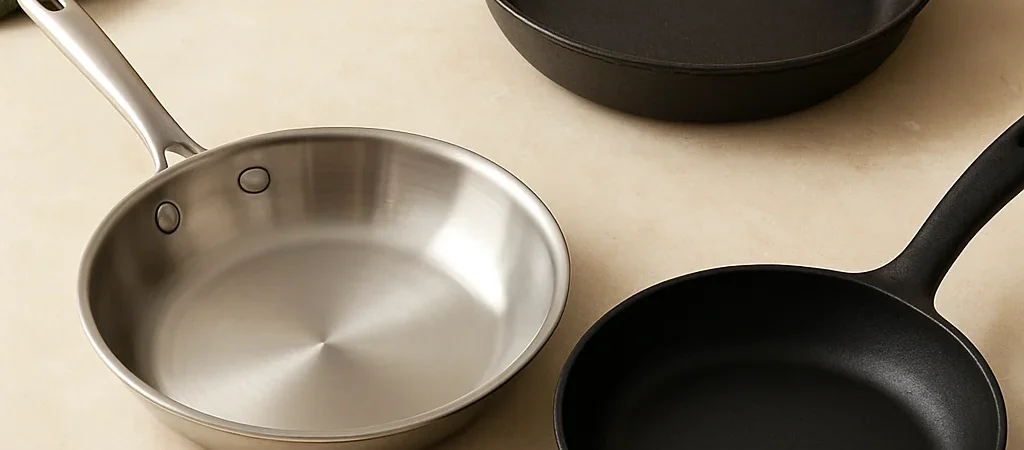
If weeknight dinners mean seared chicken, a quick pan sauce, and something green on the side, the right cookware may be a good skillet and saucepan—not a cabinet full of matching pieces. Choose around the meals you actually make and the surfaces you cook on. That makes the trade-offs between materials easier to judge.
Start With Your Cooktop
Before comparing finishes or sets, check which cookware works with your range. Induction cooktops require compatible cookware, so confirm that detail in the manufacturer’s specifications rather than assuming a pan will work because it looks substantial. If you have a glass-top range, also consider how easily a heavy pan can be moved without dragging it across the surface.
Match Material to Meals
Stainless steel is a versatile option for browning and building pan sauces, but it can take attention and the right technique to keep food from sticking. A nonstick skillet can make eggs and delicate foods easier to release, though its care instructions and cooking-surface limits matter. Cast iron suits cooks who want a pan that can move from stovetop to oven when the manufacturer allows it, but its weight and upkeep are part of the decision.
Buy Fewer Pieces With Purpose
A large set is only a value if its pieces fit your routine and storage. Write down the pans you use most, then look for those sizes and shapes in the product specifications; pay attention to included lids, oven-use guidance, and care instructions. If you are replacing one worn-out pan, a single well-matched piece may be more useful than an entire set.
Some links in Cookolla’s cookware guides may be affiliate links, which can earn us a commission if you make a qualifying purchase. We aim to explain who each type of cookware suits and where its trade-offs lie, so you can compare relevant options against your own kitchen needs.

